Residential cleanouts and construction projects across Mecklenburg County require precise container staging to keep worksites functional and driveways intact. In historic neighborhoods like Dilworth and Plaza Midwood,…
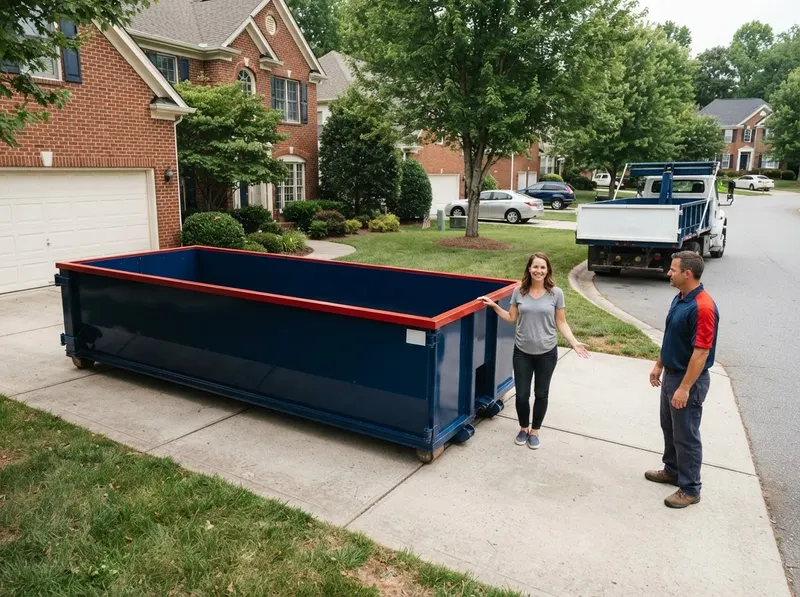
Residential cleanouts and construction projects across Mecklenburg County require precise container staging to keep worksites functional and driveways intact. In historic neighborhoods like Dilworth and Plaza Midwood, narrow driveways and low-hanging tree canopies demand careful logistical coordination. A standard 20-yard dumpster occupies roughly the footprint of a full-size pickup truck, measuring 22 feet by 8 feet. The 4.5-foot low sidewalls allow materials to be loaded over the sides or carried directly through the rear swinging door. Positioning this footprint on private property prevents the need for city right-of-way permits typically required by the City of Charlotte Department of Transportation when placing equipment on public streets. For properties governed by restrictive homeowners associations in Ballantyne or Myers Park, container dimensions fit standard single-car entryways while maintaining street clearance, complying with local aesthetic guidelines during roof replacements and multi-room renovations.
Selecting container volume depends directly on material density and project scope. While a 10-yard container holds approximately 4 standard pickup truck beds and fits a single bathroom remodel, a 20-yard container holds approximately 8 pickup truck beds, matching the debris volume generated by 40 to 60 bundles of asphalt shingles or a complete kitchen tear-out. Opting for a 30-yard or 40-yard unit provides capacity for full home framing or structural demolition, but their taller 6-to-8-foot walls make hand-loading heavy debris significantly more labor-intensive. Proper sorting is required to adhere to landfill bans administered under the North Carolina Department of Environmental Quality. Mattresses, lead-acid vehicle batteries, and liquid paints are barred from municipal waste streams, while organic tree limbs from storm cleanup must route toward dedicated compost programs managed under the Mecklenburg County Solid Waste Management division rather than mixed-debris landfills.
Jobsite safety and surface preservation remain paramount during container placement. Steel-wheeled roll-off containers can crush asphalt edges or scar decorative concrete without ground protection. Placement crews distribute gross container weight across reinforced wooden runner tracks, separating steel wheels from pavers, stamped concrete, and suburban driveways in Sedgefield and Cotswold. Worksites handling older drywall or tile demolition must follow environmental handling protocols established by the U.S. Environmental Protection Agency to avoid cross-contamination. Staging debris away from pedestrian walkways also prevents citations under standard Occupational Safety and Health Administration residential construction site guidelines. For jobs producing high volumes of reusable timber or clean framing offcuts, segregating salvageable materials supports diversion metrics recognized by the U.S. Green Building Council without adding complexity to standard dumpster staging.
Managing disposal costs requires adherence to flat-rate volumetric planning. The flat price structure eliminates surprise per-ton billing at local transfer facilities by packaging disposal allocations into the initial fee. Construction contractors working in University City and South End often process composite decking and vinyl siding that can be redirected through material processors cataloged via Earth911. If an active project involves tearing down older commercial or mixed-use framing, such as historic warehouse conversions along NoDa, safety practices should align with equipment parameters published by the Construction Industry Manufacturers Association. Coordinating load schedules with local municipal drop-off guidance provided by the North Carolina Office of the State Fire Marshal ensures that hot, combustible debris like fresh sawdust piles never create unmonitored hazards within neighborhood corridors. Clear specifications ensure predictable project flow from delivery to haul-away.
Every job gets a firm, written price after a free on-site visit.
For standards, safe disposal, and service guidance on DUMPSTER in Charlotte, NC, useful references include U.S. EPA, EPA, EPA, OSHA, Earth911, and Google Maps. General consumer and small-business resources are available from USA.gov, Better Business Bureau, FTC Consumer Advice, U.S. Small Business Administration, and Ready.gov.
Tell us about your 20-yard dumpster rental job in Charlotte and we'll send a clear, written quote, usually the same day.
 CityLoad Container Services